

In this moment of what Naomi Klein and Astra Taylor call “end times fascism,” we are bearing witness to a convergence of climate collapse and ethnonationalist violence. Facing twin assaults on gendered and planetary bodies alike, we are inundated, experiencing somatic teetering between uncanny normalization and outright fear. As feminist scholars of environmental justice, we ask: How are the particular convergences between political and ideological platforms (anti-environmentalism, anti-regulation, anti-immigrant, anti-trans, anti-vaxxer, pro-men’s-rights/Tradwife/MAHA, pro-white-power, pro-crypto/AI, and pro-technosolutionism) connected to histories of racist, colonial, and misogynist disruptions of human relationships to the more-than-human?
The gendered roots of earth-trashing are centuries old. Western modernity was—and remains—marked by violent, racializing, and patriarchal processes of European colonialism and global capitalism.
In and beyond the United States, one clear through-line is a form of masculinity that we posit as toxic in a literal sense, precisely because environmental disregard and harm so often become its hallmark. The term “toxic masculinity” emerged in the 1980s as part of the mythopoetic “men’s movement” and refers to a litany of behaviors associated with misogyny, homophobia, and violence. In the mid-2010s, the term found renewed purchase in the “man-o-sphere” fighting against a perceived “war on boys” in part by wreaking havoc on the environment through practices like “rolling coal.”

Toxic masculinity now marks a shift in intensification: from micro- to macro-aggressive, from implicit to declarative, from diffuse to targeted. The valorization of predation makes blatancy entirely the point. Unapologetic bombast fuels the decimation and starvation of Gaza, ICE’s deadly abduction and deportation campaigns, and the weaponization of the environment to create Alligator Alcatraz.
Journalist Rebecca Solnit writes, “I can sum up the Trump/Musk/Vance theory of power in five words: ‘We have power; you don’t.’ Alternative version in six words: ‘we can do anything we want.’” Solnit’s paraphrase recalls Paul Noth’s viral comic from Trump’s first term that caricatured Trump as a wolf amongst sheep, stating: “I am going to eat you.” On Day One of Trump 2.0, twenty-six Executive Orders were issued: five of which tackled energy and the environment, offering a thesis of the administration’s rapacious anti-environmentalism, alongside its xenophobia, racism, imperialist ambitions, and misogyny.
These tactics are not new. Rather, they are newly brandished ways of dominating nature. Below we name and historicize three ways that toxic masculinist discourses, policies, and modes materialize toxic effects unevenly across bodies and environments differentiated by race, class, gender, and sexuality.
The Purchase and Property of “Nature”
The gendered roots of earth-trashing are centuries old. Western modernity was—and remains—marked by violent, racializing, and patriarchal processes of European colonialism and global capitalism. Feminist philosophers and environmental historians like Val Plumwood and Carolyn Merchant have documented how European colonial conquest and scientific exploration often linked mastery over nature with domination over women. The opposition between “untamed” nature (coded non-white and gendered female) and “civilized” culture (Christian, white, and masculine) provided European colonial powers with ideological rationales for conquest and a material basis for capitalist and extractive forms of growth.


Asia, Africa, and the Americas provided emergent capitalist systems with the land, labor, and raw materials—the “natural resources”—necessary for the expansion of markets and production. Colonial powers drew on understandings of nature as feminine, docile, and available for conquest (terra nullius), alongside arsenals of entitlement (the power to define, name, and shape ideas) and through explicit racial violence, whether directed at Indigenous peoples perceived as nature or at enslaved Africans categorized as property.
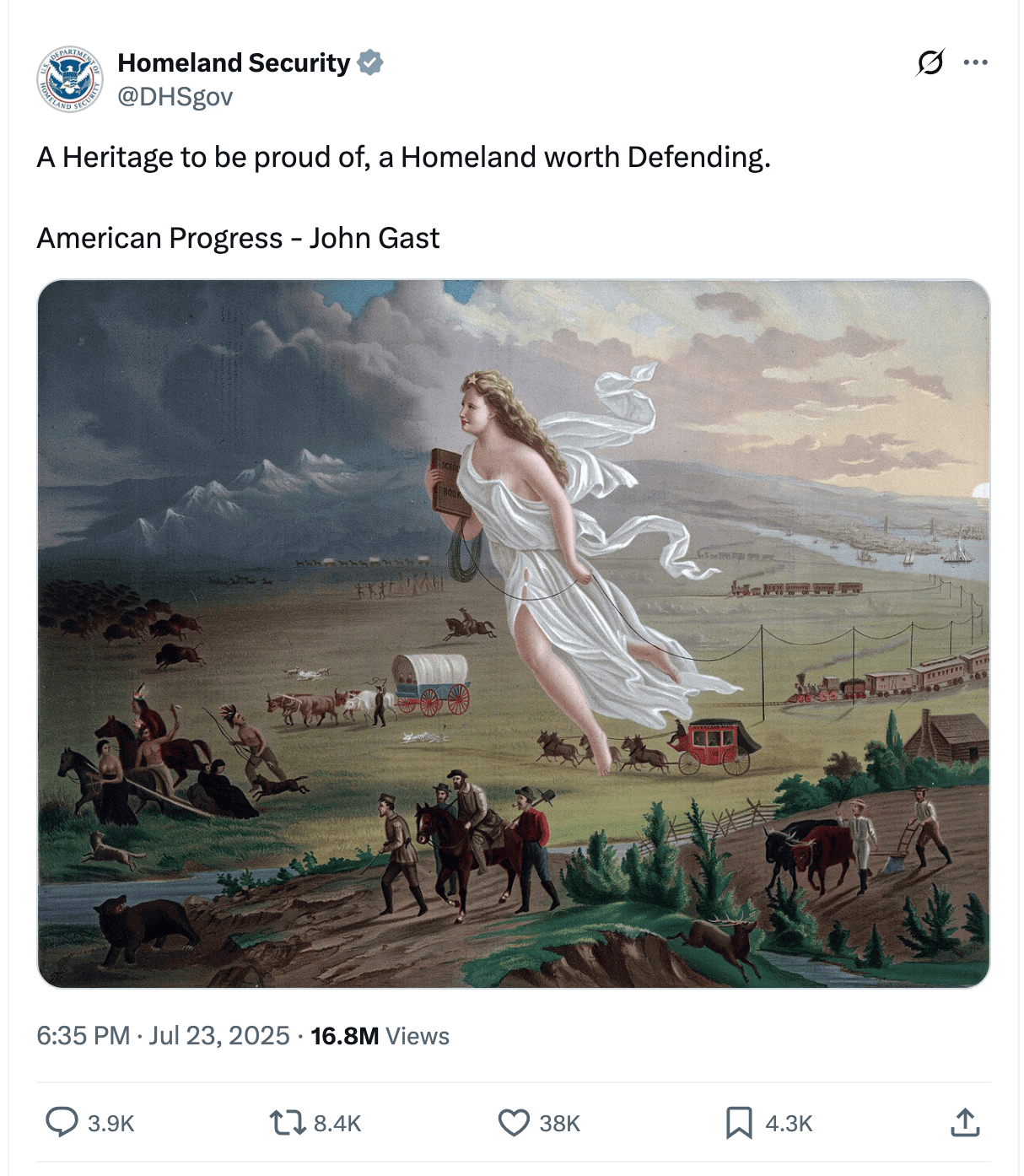
Nineteenth-century racialized hierarchies of civilization and Manifest Destiny glorified white male rugged explorers and bolstered westward expansion. Eugenic masculinity converged with U.S. anxieties about growing imperialism across the globe during the Spanish-American War. The American transformation into an industrial, urban economy fueled xenophobia as elites angled to control the reproduction of those deemed overly fertile and incompetent (immigrants, disabled, Indigenous, and Black populations). Those considered outside the realm of normative humanity were subject to scrutiny and sterilization. After World War II, the U.S. spectacularized, racialized, and gendered violence through Cold War nuclear weapons detonations throughout the Pacific. By sexualizing “Atomic Culture,” toxic masculinity mainstreamed the rampant extraction of uranium and normalized the disposal of nuclear waste on Indigenous lands.


Contemporary debates from climate change denialism (petro-masculinity) and oil extraction (captured in the chants to “Drill, Baby, Drill”), plastics and petrochemical production, and their links to “chemical castration,” exemplify a return to nineteenth-century strategies for shoring up American power. This reinvigorated investment in racial capitalism, colonial expansion, and eugenicist gender normativity can be seen in Trump’s proclamations to reignite territorial appropriation (Canada, Greenland, Panama, Venezuela) as well as his renaming rampage (the Kennedy Center, the “Gulf of America,” “Lake of America,” “New America,” etc.).
White Purity and The Toxins of Masculinity
At least two branches of toxic masculinity surface as reactions to the so-called end to “Man’s” reign on Earth. One insists on traditionalist returns to land and wealth entitlements imbued in the white man at the head of a family and estate. Perhaps most overtly emblematized by the MAGA base, these conservative longings include those of white supremacist Richard Spencer and the Alt-Right, the Unite the Right Rally tiki torch march in Charlottesville in 2017, and even milk-chugging neo-Nazis.
A second branch relies on the mega-wealth behind technosolutions for the limitations of the human body and its faltering reproduction. These futurity-minded venture capitalists pursue transhumanist, techno-virile, AI-supported fantasies of uploading one’s consciousness to the cloud to re-virilize the (wealthy) white male.
While one branch relies on a return to more classic forms of dominant masculinity, the other is a wealth-injected “blueprint” to outlive and outlast while burning everything else down. Both respond to pro-natalist obsessions with Replacement Theory, which avers the ethno-national replacement of the white race with immigrants and people of color. Disaggregating these iterations requires examining their through-lines to trace the acceleration and evolution of toxic masculinity.
Current debates echo long-rehearsed histories of taming feminized nature and controlling reproduction, through conquest, purchase, and selective breeding.
Although renaming is a common tactic amongst fascist regimes, Trump’s conscription to capitalist corruption appears singular. His branding and germaphobia highlight how white purity sanctifies the ego and the market as requiring violent erasures of history. Toxic masculinity rejects humility, alongside any basic understanding of history, including Indigenous relationality to land outside of property.
Anxieties around the fragility of masculinity have coincided with scientific research into the effects of pesticides, herbicides, and hormones leaching into common drinking sources. Biologist Tyrone Hayes became known for his studies of the herbicide atrazine on African clawed frogs when he concluded that even “low ecologically relevant doses” of atrazine promoted the conversion of testosterone to estrogen. He named this mutation process “demasculinization” through which the frogs were “chemically castrated.” In 2015, alt-right radio host Alex Jones cited this research to declare that tap water was a “gay bomb” that contained chemicals that “turn the freakin’ frogs gay.”
The obsession with “gay” frogs and endocrine disrupters, and larger attacks on masculinity which queer ecologists call “sex panic,” became sutured to a notion of a dispersed and imperceptible threat.
Now, the anxieties about masculinity have been perversely scaled to particular human bodies. We witness this in the rising tide of “bathroom bans,” and generalized panic around “unstable categories” of gendered difference. These culminate in transphobic efforts like Executive Order 14168, which claims to “restore biological truth” through the condemnation of and tacit condoning of violence against gender-nonconforming and trans bodies. Secretary of Health and Human Services Robert F. Kennedy, Jr. refers to gender-affirming healthcare for trans individuals as “chemical castration” and the convergence of misogynist and transphobic ideologies is embodied by the alliance between anti-vaxxers and MAHA influencers.

The diffuse threat of toxicity has coalesced into a material desire to protect the bounds of normative masculinity, by targeting the non-normative bodies perceived as “impure” rather than the corporations who produce the pollutants.
These perceived threats to masculinity and pro-natalist nationalism are tied to control over sexuality and reproduction, including restrictions on access to birth control, abortion, and gender-affirming medical care. Current debates echo long-rehearsed histories of taming feminized nature and controlling reproduction, through conquest, purchase, and selective breeding. “Your body, my Choice” gets enacted through the overturning of Roe v. Wade. The contradictory proliferation and restriction of reproduction points to a eugenic belief that some people (usually white/entitled/wealthy) need to reproduce more, while others (non-white/immigrant/poor) should reproduce less, if at all. Toxic masculinisms give rise to the Tradwife, a contemporary conservative movement among women who wish to revive the housewife defined by traditional gender roles, homemaking, and subservience to patriarchal ideals. The Tradwife relies on cosplaying settler colonial homesteading practices that romanticize the propertization of land and the elimination of Indigenous peoples.
These gendered politics are linked to the parallel obsession with racial (white) purity and (American) citizenship as demonstrated by current legal debates about the Fourteenth Amendment and the administration’s attempts to revoke birthright citizenship. If the toxic masculinism of homesteading claims ownership of the soil, then the proposed overturning of jus soli (“the right to soil”) extends these propertied logics as a fear-based response to ecological toxins and demographic shifts of the U.S. body politic.
The Biopolitics of Toxic Masculinity: Immortality for the Few
Another way toxic masculinity asserts its “make live, let die” power is through the patriarchal family, augmented nowadays through technology-based pro-natalism and life-extending protocols. The Billionaire Broligarchy pursues immortality to extend their own lives and push the lifespan of the market to the limits of planetary exhaustion. Tech giant Bryan Johnson made headlines for transfusing his blood with his son’s to rejuvenate cellular life. Johnson professes he’s interested in “reframing what it means to be human” and combatting the inevitability of death by outsourcing the management of his body to an algorithm.
Echoing earlier twentieth-century movements toward “technocracy,” venture capitalists invest in AI and Crypto because they have lost faith in the nation-state and the human. Financing the technologies that purport to transcend human and planetary vulnerabilities, private wealth funds seek to transfer power from nation-states to those who can buy them out. Johnson is one of several tech entrepreneurs amassing enough venture capital to bankroll “free private cities” like Próspera, where he can receive his experimental treatments. Toxic masculinity contradicts itself in its imposition of “natural” categories of sex and gender, while simultaneously investing in biohacking rituals that extend eugenic claims to racial and bodily purity.
These pursuits of individualized immortality occur alongside the chaotic, large-scale slashing of public funding, epitomized by Elon Musk wielding a phallic chainsaw at the Conservative Political Action Conference. Musk’s fraternity of Department of Government Efficiency (DOGE) agents decimated support for health research and foreign aid programs, including avalanche monitoring in Nepal, a region made especially vulnerable under climate change.

Unlike climate deniers, the tech bros know the Earth is going to get awfully uncomfortable soon due to climate crises. Their responses, drawn from “me first” plans for a post-planetary life, run the gamut, but are ultimately linked. Their plans for space mining and colonization speculations continue older forms of extraction of and domination over environments as resources. On the other hand, they are obsessed with their own bloodlines (Musk’s pro-natalism has produced fourteen children conceived through IVF and other assisted reproductive technologies). Tech tycoons have amassed a fleet of superyachts. Musk’s Space X and Jeff Bezos’ Blue Origin companies extend that ark-like project into space. Bezos has invested millions to create drone-labor-supported agriculture to support extraplanetary human life.
In other words, the endpoint of toxic masculinities is to leave the planet trashed and depleted.
After the threshold
A gyre of toxic masculinities disrupts human accountability to a more collective planetary thriving. Climate scientists and activists have long marked a 1.5-degree Celsius increase in global average temperature as the point at which climate change will become catastrophic. Having passed that marker, some say openly that we are too late. And yet, the toxic masculinism that has sent us hurtling to this point must be overthrown, lest the same practices extend beyond our planet.
We join others in calling for: interdependent collectivity in the face of heinous privatization, abundance in the face of austerity, anticolonial methods in the ongoing nightmare of centuries of death-dealing domination and militarization, and feminist care praxes in response to masculinist fearmongering of vulnerability.
Featured Image: “Fight with Cudgels” by Francisco Goya, 1820-1823.
The authors are collaborating on a volume called Toxic Masculinities, under contract with the University of Washington Press.
Aimee Bahng, Associate Professor of Gender and Women’s Studies at Pomona College, teaches courses on environmental justice, disability studies, and racial capitalism. Currently working on a book titled Settler Environmentalism and Pacific Resurgence, she previously wrote Migrant Futures: Decolonizing Speculation in Financial Times (Duke University Press, 2018), which examines narrations of futurity across various platforms, from speculative fiction by writers of color to the financial speculations of the 1%. Website. Contact.
Natalia Duong is Assistant Professor of Asian American Studies and Science and Technology Studies at the University of California, Davis. Her research examines the intersections of toxicity and disability and how chemicals create infrastructures of harm and kinship. Her work has been published in Catalyst: feminism, theory, technoscience, Crip Genealogies, Amerasia, and more. Website. Contact.
Rebecca H. Hogue is an Assistant Professor in the Department of English at the University of Toronto. A literary and cultural historian of Oceania and the Nuclear Age, her research considers the role of the arts in nuclear abolition, demilitarization, and settler responsibilities to decolonization. Her work has been published in International Affairs, Amerasia, CNN Opinion, and more. Website. Contact.
Julie Sze is Professor of American Studies and the Founding Director of the Environmental Justice Project at UC Davis. She has authored 4 books, including Climate Freedoms (University of Minnesota Press), which is forthcoming in 2027. She also edited Sustainability: Approaches to Environmental Justice and Social Power (NYU Press, 2018) and has written over 70 articles and book chapters. Sze works in interdisciplinary collaborations and with community-based organizers in California and New York. Website. Contact.


You must be logged in to post a comment.